Helping a child through the loss of a pet
For a lot of children, a pet is the first death they ever meet. How it is handled tends to stay with them — not the loss itself so much as whether the grown-ups told the truth and let them be sad. You do not have to get it perfect. You mostly have to be honest and stay close.
Use plain, true words
It is tempting to soften it — "put to sleep", "gone away", "lost". Young children are literal, and these can frighten more than they comfort: a child told the dog was "put to sleep" may become afraid of sleep. It is kinder to say, gently, that the animal died, and that dying means their body stopped working and they will not come back.
Let them see you sad
Children take their cue from the adults. If you hide your own grief entirely, the message is that this is not something we talk about. Letting them see that you are sad too — and that you are still okay — teaches them that sadness is survivable.
Answer the question they actually asked
"Where is he now?" is often a smaller question than it sounds — sometimes they just want to know his body is somewhere safe, not a lecture on what you do or do not believe. Answer simply, in line with your own family's beliefs, and let them ask again tomorrow, because they will.
Expect the grief to come sideways
Children grieve in bursts. They will be devastated for ten minutes and then ask for a snack, and this is normal, not cold. It may resurface weeks later at bedtime. Following their lead, rather than expecting a steady sadness, is the thing.
Let them make something
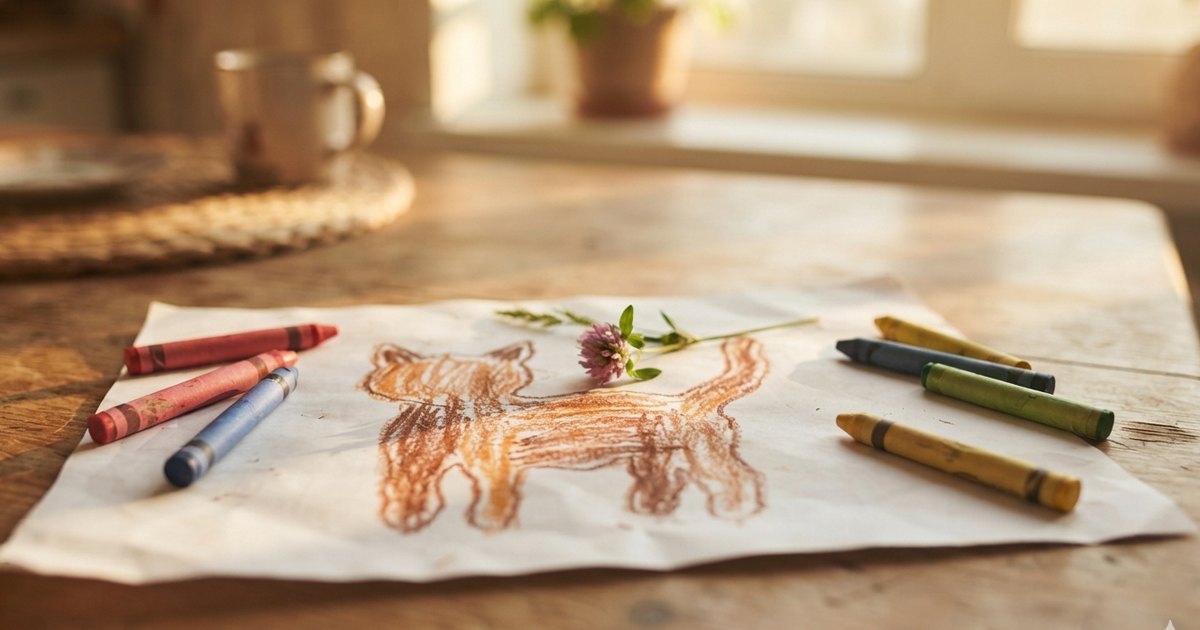
A ritual gives a child somewhere to put the feeling. Draw a picture. Plant something. Choose the photograph. Say a few words in the garden. Children often do grief better than adults do, if we let them make it into something they can see and touch.
Making a small memorial page together can be one of these rituals — choosing the best photographs, deciding what to write with the free tribute writer, reading back the notes other people leave. It gives a child a task inside the sadness, and a place to visit when they miss the animal later.
If that would help your family, you can make one together on Everkept — it is gentle to use, and a child can help pick the pictures and the words. However you do it, the aim is the same: not to rush them past the sadness, but to walk through it beside them.